Preview · EnglishPortuguese

Studies

Here you will find all of the Amazon 2030 studies published in English, including the policy briefs and the Amazon Facts series. They are written by researchers from several Brazilian institutions on deforestation, bioeconomy, livestock, restoration, public security, labor and the development of the region.

53 studies

September 28, 2026

Agriculture in the Legal Amazon: productivity conditions, climate risks and proposals for better production in already cleared areas

SPI

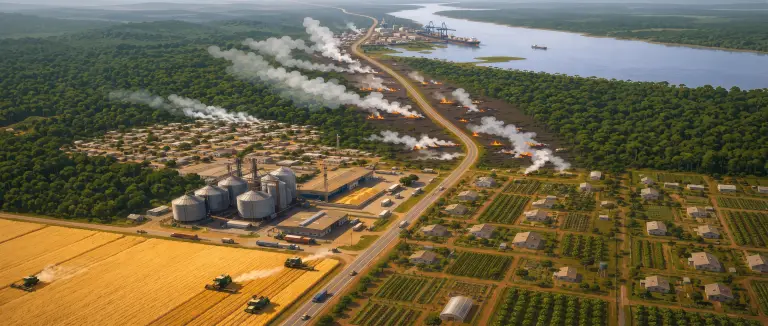
Brazil’s Legal Amazon has the potential to increase agricultural and livestock production without clearing additional forest. That is the main finding of a new study, “Agriculture in the Legal Amazon: Productivity, Climate Risks and Proposals for Producing More on Land Already Cleared”, by Paulo Barreto, Ritaumaria Pereira and Gabriel Salles Barreto, published by


June 23, 2026

Social Progress Index – Brazil – 2025

SPI

The second edition of the Social Progress Index (SPI) assessed all 5,570 Brazilian municipalities using 57 social and environmental indicators. The report shows that, despite gradual progress, the challenges of ensuring quality of life for Brazil’s population remain significant and unevenly distributed across the country. The SPI also evaluates the average performance of

June 23, 2026

The leading role of Brazilian forests in the global climate agenda

Deforestation

Brazil has the most favorable conditions on the planet to lead the global climate agenda through forest conservation, restoration, and forestry. This is the main conclusion of the study The Leadership of Brazilian Forests in the Global Climate Agenda, which presents consolidated data on the strategic role of Brazil’s forests in addressing the

January 12, 2026

Combating deforestation reduces crime in the Amazon

Public Security

Fighting deforestation not only protects the forest—it also saves lives. That is the conclusion of a new study by the Amazônia 2030 project, “Combating deforestation reduces crime in the Amazon.” The research shows that strengthening environmental enforcement—especially through the DETER satellite monitoring system, implemented in 2006—reduced homicides in the region by about 15%,

November 13, 2025

To protect the Amazon – we have to reforest it

Policy BriefsRestoration

The conversion of already deforested areas into sustainable productive systems can generate green jobs, increase regional income, and reduce pressure on the forest, according to a new study showing that the Amazon has 35 million hectares available for productive reforestation and currently captures only 3% of a global US$233 billion market in forest-compatible

October 21, 2025

State of the Brazilian Amazon

Amazon Facts

The State of the Brazilian Amazon is an unprecedented compilation that brings together some of the main findings of the Amazônia 2030 Project, organized specifically to mark the UN Climate Conference taking place in Belém do Pará. More than just a statistical snapshot, this edition aims to serve as a guide for those

October 17, 2025

How livestock farming can lead Brazil’s climate action

Livestock

Brazilian cattle ranching — currently responsible for most of the country’s greenhouse gas emissions — can also become the main lever to reduce deforestation and accelerate the climate transition in Brazil. This is the central finding of the new study “How Cattle Ranching Can Lead Brazil’s Climate Action”, published by the Amazônia 2030
October 17, 2025

The forest-climate nexus for the Brazilian Amazon

Deforestation

Developed from a mechanism created by CPI/PUC-Rio, the new study implements the Deforestation Reversal Mechanism (RDM) to restore forests at scale in the Amazon. The RDM was originally conceived after COP30 President, Ambassador André Corrêa do Lago, convened a council of economists to contribute to the economic dimensions of the conference, including the

August 12, 2025

Lessons from the expansion of cattle ranching in Brazil (2000–2023) for sustainable and efficient production

Livestock

Cattle ranching occupies 64% of Brazil’s agricultural area but contributes only 17% of the sector’s gross production value, reflecting inefficient land use and structural challenges. An unprecedented study by the Amazônia 2030 project analyzes the expansion of cattle ranching between 2000 and 2023 and points to pathways to transform the sector, ensuring greater

June 26, 2025

Forest restoration in the Amazon: what is the role of state-level public policies?

Restoration

Forest restoration in the Amazon could be one of the most powerful tools to reconcile environmental conservation, economic development, and climate action. With millions of hectares deforested and a high natural regeneration potential, the biome is uniquely positioned to lead a new forest-based economy—generating income through native forest products and carbon credits. But

June 26, 2025

Legal gold garimpo in the Amazon: recommendations for adequate control of socio-environmental impacts

Public Security

A new study by researchers from Climate Policy Initiative/Pontifical Catholic University of Rio de Janeiro (CPI/PUC-Rio) and the Amazon 2030 project reveals that legal gold mining (garimpo) in the Amazon causes widespread deforestation, pollution, and social harm—similar to or even exceeding the impact of illegal mining in some cases. The report warns that

April 29, 2025

The Amazon in the New PAC: recommendations to promote sustainable infrastructure

Amazon Facts

In August 2023, the federal government launched a new edition of the Growth Acceleration Program (Novo PAC), promising to boost the national economy through infrastructure investments aligned with the Ecological Transformation Plan. However, a new analysis by the Climate Policy Initiative (CPI/PUC-Rio), in collaboration with the Amazônia 2030 project, warns that the program

March 30, 2025

Deforestation cuts the lights: Itaipu, Belo Monte, and the cost of forest loss

Deforestation

Brazil’s two largest hydroelectric power plants (HPPs), Itaipu and Belo Monte, play essential roles in the country’s electricity sector. With respective installed capacities of 14 GW and 11.2 GW, they account for around 11% of Brazil’s electricity generation capacity. However, the full realization of the plants’ potential depends on water availability in the

December 4, 2024

Restoring Brazil’s publiclands: exploring public-private partnership options

Restoration

The restoration of deforested and degraded public lands plays a fundamental role in promoting a new development model for the Amazon, based on the sustainable use of the forest’s natural resources and taking advantage of carbon market opportunities. To reap the environmental and socio-economic benefits of large-scale forest restoration in the region, partnership

October 17, 2024

Cutting down the (hydropower) plants: how the Amazon deforestationis jeopardizing electricity generation in Brazil

Deforestation

The Amazon rainforest plays a crucial role in the global climate agenda and the Brazilian economy. It has a large carbon storage capacity and provides essential ecosystem services, including the regulation of rainfall patterns on a continental scale. The loss of forest vegetation negatively affects local biodiversity, the country’s economic development, and global

July 23, 2024

The Tropical Forests Mechanism

Deforestation

Amazon 2030, with the support of BVRio and Igarapé Institute, released today a concept note on a Tropical Forests Mechanism (TFM) aimed at supporting nature finance at scale to guarantee the maintenance and enhancement of tropical forests worldwide. The mechanism is expected to complement the Brazilian government’s Tropical Forests Forever Fund (TFFF), announced

February 23, 2024

Amazônia 2030 : bases for sustainable development

Amazon Facts

The Amazon 2030 project aims to propose solutions for the economic, social, and environmental development of the Brazilian Amazon. In the first phase (2020-2022), the project – led by Brazilian researchers – engaged over 80 researchers from various regional, national, and international institutions. They published 60 technical reports on topics related to social

September 21, 2023

Carbon and the fate of the Amazon

Deforestation

What would happen to the Amazon if countries paid for its captured CO2? Brazil’s entry into the carbon market with a minimum value of US$ 20 could transform Amazon’s future. This is the result of the unprecedented study released by Climate Policy Initiative/Pontifical Catholic University of Rio de Janeiro (CPI/PUC-RIO) and Amazon 2030
January 27, 2023

The 5 Amazons

Amazon Facts

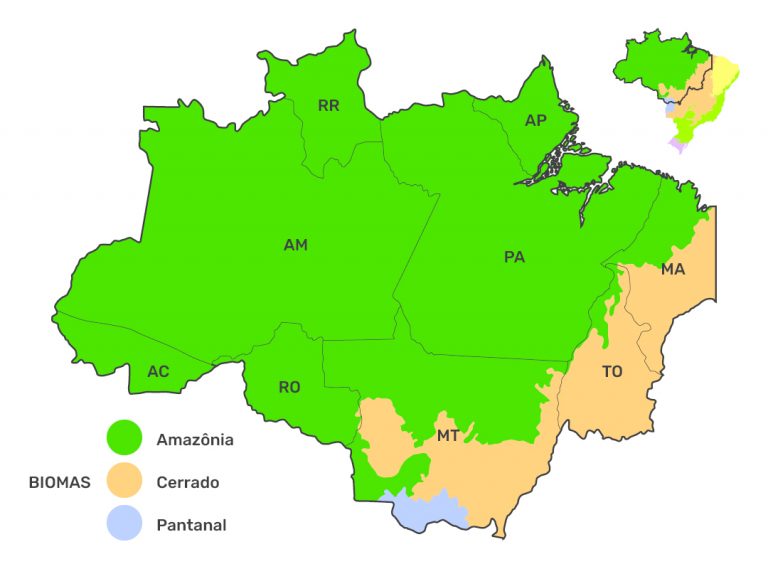
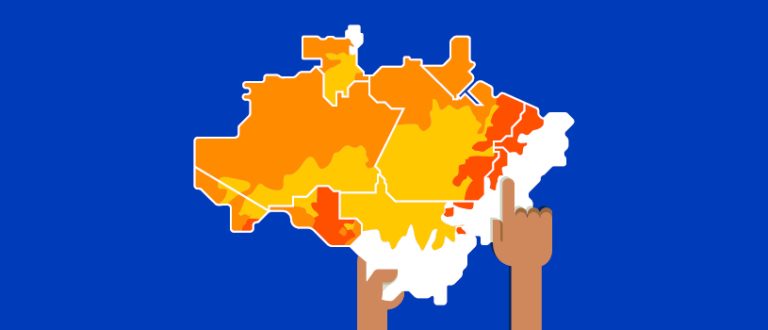
The Brazilian Amazon covers about 5 million square kilometers (59% of Brazil), with significant socioeconomic and natural differences within its territory. Although complex and heterogeneous, the Brazilian Amazon can be divided into five major zones based on the remaining vegetation cover. In turn, each of these zones is associated with specific public policies

January 24, 2023

The Amazon paradox

Amazon Facts

The recent history of the Brazilian Amazon is marked by rapid population growth and an explosive increase in deforestation. In the last 50 years, deforestation has gone from a mere 0.5% in 1975 to 21% in 2021. Put together, the accumulated destruction of around 86 million hectares of forests is equivalent to the
October 28, 2022

The Amazon paradox

Amazon Facts

The recent history of the Brazilian Amazon is marked by rapid population growth and an explosive increase in deforestation. In the last 50 years, deforestation has gone from a mere 0.5% in 1975 to 21% in 2021. Put together, the accumulated destruction of around 86 million hectares of forests is equivalent to the
August 26, 2022

Accessibility in the Legal Amazon: digital solutions

Amazon Facts

The Legal Amazon is the most isolated region in Brazil. Reducing this isolation and improving the economic ties between the Legal Amazon and other parts of the world is key to boosting the region’s economy and creating jobs and income for the local population. Traditionally, investment in logistics infrastructure, and particularly in roads,

August 26, 2022

Accessibility in the Legal Amazon: measuring market access

Amazon Facts

An excellent transportation infrastructure is essential for promoting regional development. Areas served by efficient networks of waterways, railways and roads are well-equipped to do business with other regions. This ends up increasing local competitiveness and influencing businesses and individuals to establish themselves in the region. The increase in the number of businesses and

June 23, 2022

Financial opportunities for Brazil from reducing deforestation in the Amazon

DeforestationPolicy Briefs

There are many new opportunities emerging in voluntary and compliance carbon markets for REDD+ (Reducing Emissions from Deforestation and Forest Degradation) credits. In this policy brief we focus on opportunities linked to the LEAF Coalition (Lowering Emissions by Accelerating Forest finance). We quantify the size of the opportunity from reducing deforestation in the

April 19, 2022

Vocational education in the Legal Amazon

Labor

Vocational Education in the Legal Amazon is suboptimal. Faced with a particularly challenging job market for young people, the low representativity of technical raining in the region’s workforce has made it even more difficult for workers to enter the workforce. This study, produced by researchers from the Amazon 2030 project (AMZ 2030), reveals

April 19, 2022

Illegality and violence in the Amazon

Public Security

This report analyzes the evolution of violence in the Legal Amazon over the last 20 years, focusing on the relationship between violent events or homicides and illegal activities related to environmental crimes. The region, which had relatively low levels of violence until the late 1990s, has become one of the most violent in

April 19, 2022

Education in the Legal Amazon – assessment and critical factors

Labor

Whilst Brazil has largely overcome the challenge of poor provision of elementary education – with numbers close to the total number of children enrolled in primary education and increasing enrollment rates in early childhood education and secondary education -, the Legal Amazon still faces difficulties in access to education, particularly in early childhood

January 31, 2022

Amazon: food territories

Bioeconomy

Companies in the Brazilian Amazon already export 64 forest-compatible products, with an average annual revenue of nearly US$300 million.1 This figure seems impressive but represents only 0.17% of the corresponding global markets. In the more specific case of products linked to food chains, the participation of companies in the Amazon is also modest,

January 31, 2022

Strategies for the development of the Brazilian Amazon: lessons learned from pre-competitive arrangements

Amazon Facts

Communities and companies based in the Legal Amazon already export 64 products compatible with the forest and obtain an average revenue of almost US$300 million per year, but this value corresponds to only 0.17% of the corresponding global markets. Surprisingly, the largest exporters of these products are not based in advanced industrial countries

January 31, 2022

Cassava: between subsistence and business

Bioeconomy

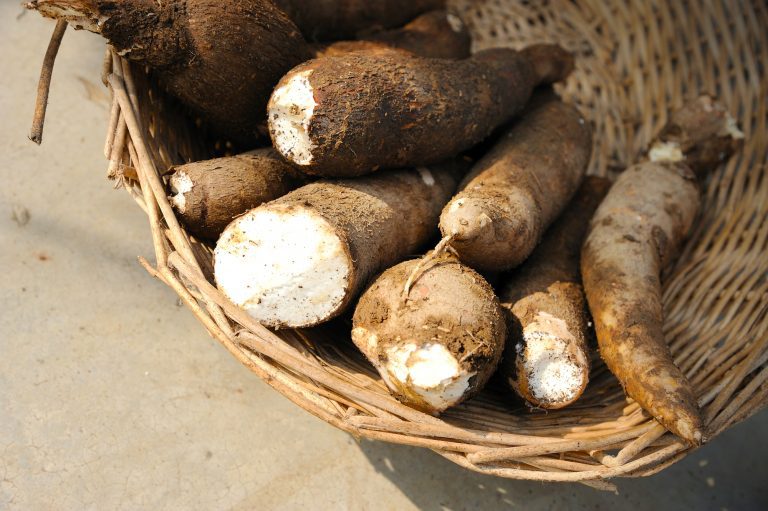
Cassava (Manihot esculenta crantz) is a food plant domesticated by indigenous peoples in the Amazon for at least 9,000 years. In the Amazon, there are at least 140 identified native varieties, in addition to several agronomically developed cultivars. Rich in carbohydrates, cassava is one of the most important plants for food in developing

January 31, 2022

Flavor or bulk cacao: options for the Amazon

Bioeconomy

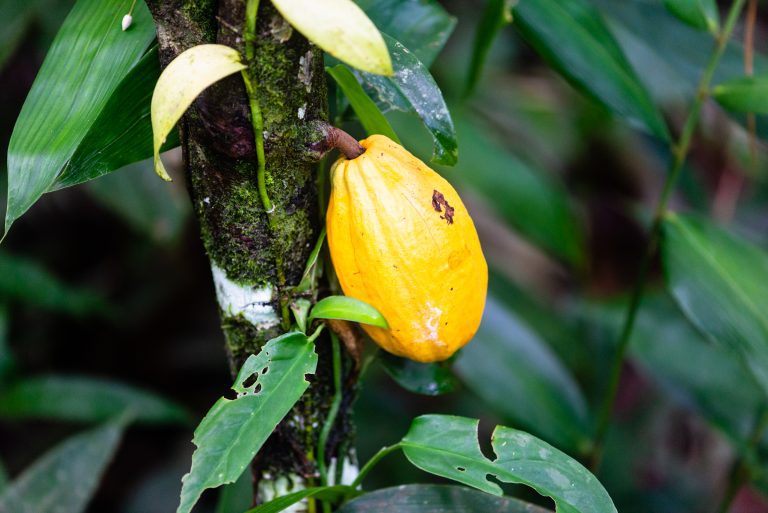
Despite being native to the Amazon, the origin of cacao (Theobroma cacao) is still unknown in global consumer markets and even in national ones. Cacao conquered Europe in the mid-16th century, from varieties planted in Central America and the Caribbean. More recently, cacao has been associated with African countries, which are responsible for

January 31, 2022

Understanding the food system in the Amazon

Bioeconomy

The food production system – a set of pre-production, production and post-production activities related to food – is a strategic theme worldwide due to its repercussions in different spheres: in the economy, in particular, with the generation of income and employment; socially, related to food security; and the climate agenda, interfering with greenhouse

November 17, 2021

2021 Amazon Facts

Amazon Facts

The publication 2021 Amazon Facts summarizes economic, social, and environmental information from the Legal Amazon. This report is part of the Amazon 2030 initiative and was prepared based on secondary data from various public, research, and civil society institutions. In Brazil, there are two main geographic territories for the region: Amazon biome and

November 17, 2021

How did Bolivia take over the global Brazil nut market?

Bioeconomy

For centuries, Brazilian companies dominated the Brazil nut (BN) market to the point that, in many languages, the product still bears the country’s name. In a surprising turnaround, in 2019, Brazilian companies accounted for only 11% of this market while companies in Bolivia maintained a 74% share. This despite operating in a country

October 15, 2021

Increasing cattle productivity in the Amazon requires new technologies

Policy BriefsLivestock

Cattle ranching is associated with deforestation in the Amazon region – a large part of the deforested areas have been converted to pasture. This pattern of extensive cattle ranching in the Amazon region is distinguished from the rest of Brazil. While the rest of Brazil uses less pasture over time for livestock production,

October 15, 2021

Opportunities for exporting forest-compatible products

Bioeconomy

What activities can drive the Amazon’s regenerative and low-carbon economic development in this decade? The most frequent answers involve the processing of raw materials currently sold in raw state, the sale of forest carbon credits and the discovery of new compounds, molecules or materials from the forest’s biodiversity. These suggestions are promising, but