Blog

  • LANDING ON WATER: Air Interdiction, Drug Trafficking and Violence in the Brazilian Amazon

    LANDING ON WATER: Air Interdiction, Drug Trafficking and Violence in the Brazilian Amazon


    Download here

    The air interdiction policy implemented in Brazil in 2004 brought a series of consequences for drug trafficking in the Amazon, leading to a shift of air routes to the region’s rivers and contributing to increased violence. This is the main conclusion of the study “Landing on Water: Air Interdiction, Drug Trafficking, and Violence in the Brazilian Amazon”, published by the Amazônia 2030 project.

    The restriction on the use of airplanes for cocaine transport made air logistics riskier and more expensive, pushing traffickers to use Amazonian waterways. This shift exposed riverside communities to organized crime, resulting in a sharp increase in violence. Between 2005 and 2020, about 1,430 homicides in municipalities along Amazonian rivers were directly linked to this change in trafficking.

    According to the study conducted by researchers Leila Pereira, Rafael Pucci, and Rodrigo R. Soares, the restriction on air traffic forced traffickers to turn to river routes, directly affecting riverside communities.

    “Air interdiction directly impacted the logistics of drug trafficking in the region, displacing criminal activity to areas previously less exposed, such as the banks of the Amazon rivers. This brought additional challenges for security forces and for local communities, which began living more closely with this criminal dynamic,” explains Rodrigo R. Soares.

    The study also reveals that the rise in homicides was directly related to the increase in cocaine production in the Andean countries (Bolivia, Colombia, and Peru). Beyond the rise in homicides, the study points to an increase in overdose deaths, indicating greater availability of cocaine in the affected municipalities. The research also shows that organized crime demonstrated a high capacity for adaptation, using local networks and technologies to maintain its operations despite intensified air enforcement.

    The researchers warn of the need for a more integrated approach to combating trafficking, avoiding isolated measures that may generate collateral impacts. “Public security policies must take into account the displacements of organized crime and their effects on local communities. Combating trafficking in the Amazon requires strategies that consider different modes of transport and the region’s social realities,” the study highlights.

    Read the full paper here.

  • Fatos da Amazônia – Edição COP 30

    Fatos da Amazônia – Edição COP 30

    O Fatos da Amazônia 2025 – Especial COP30 é uma compilação inédita que concentra alguns dos principais achados do Projeto Amazônia 2030, organizada especialmente para marcar a realização da Conferência do Clima da ONU em Belém do Pará. Mais do que um retrato estatístico, a edição busca servir como guia para quem deseja compreender a heterogeneidade e a riqueza da Amazônia, reunindo dados fundamentais sobre território, população, meio ambiente e economia da região em um momento decisivo para o futuro do planeta.

    A COP30 (30ª Conferência das Nações Unidas sobre as Mudanças Climáticas) reunirá líderes de quase 200 países, além de cientistas e representantes da sociedade civil, para discutir compromissos e ações contra a crise climática. Pela primeira vez, o evento acontece no coração da Amazônia, reforçando a centralidade do bioma para o futuro do planeta.


    Principais destaques 

    • Território e população: a Amazônia Legal cobre 59% do Brasil, com 5 milhões de km² e 26,7 milhões de habitantes (13% da população nacional) distribuídos em 773 municípios.


    • Cinco Amazônias: o relatório classifica a região em cinco zonas distintas — florestal (39% da área), sob pressão (29%), desmatada (11%), não florestal/cerrado (21%) e urbana (76% da população).


    • Desmatamento: em queda desde 2021, mas ainda crítico. O acumulado chegou a 857 mil km² até 2024, o que corresponde a 20,6% da cobertura florestal original. Estados como Maranhão (65,9%), Mato Grosso (35,3%) e Pará (26,4%) perderam parcelas expressivas de sua vegetação.


    • Queimadas: em 2024, a região registrou 192,7 mil focos de calor, o maior número desde 2014 — aumento de 52% em relação a 2023, puxado principalmente por Mato Grosso (+133%) e Roraima (+102%).


    • Emissões: a Amazônia Legal respondeu por 1,1 bilhão de toneladas de CO₂ em 2023, quase metade das emissões brasileiras. As emissões líquidas foram de 602 milhões de toneladas, equivalentes a 36% das emissões líquidas nacionais.


    • Bioeconomia: os 10 principais produtos da região movimentaram bilhões em 2023. O açaí liderou com R$ 8,9 bilhões, seguido por café canephora (R$ 2,5 bi), banana (R$ 2,4 bi), cacau (R$ 2,1 bi) e castanha-do-brasil (R$ 172 mi).


    • Pobreza: em 2024, cerca de 10 milhões de pessoas estavam em situação de pobreza na região, o equivalente a 36% da população da Amazônia Legal, acima da média nacional.


    • Violência: a taxa de homicídios segue elevada, alcançando 32,9 por 100 mil habitantes em 2023, ainda acima da média nacional.

    O estudo mostra que a Amazônia não é uma realidade única, mas sim múltiplas Amazônias que combinam diferentes níveis de conservação, uso da terra e condições sociais. Reconhecer essa diversidade é essencial para formular políticas que conciliem conservação ambiental, inclusão social e prosperidade econômica.

    O Fatos da Amazônia Edição COP30 contou com o apoio do Fundo Vale, Instituto Itaúsa, Instituto Clima e Sociedade (iCS) e da Gordon and Betty Moore Foundation.

  • The Vocation of Forest Restoration in the Amazon Based on Secondary Vegetation

    The Vocation of Forest Restoration in the Amazon Based on Secondary Vegetation


    Download here

    In 2023, 5.7 million hectares of secondary vegetation at least six years old were mapped in the Amazon biome, of which 4 million hectares are in areas with low agricultural potential—that is, they do not compete with grain cultivation. This figure reveals a major opportunity for conservation and environmental restoration in the region, according to the Amazônia 2030 project study The Potential for Forest Restoration in the Amazon Based on Secondary Vegetation.

    Forest restoration emerges as an essential strategy to mitigate climate change by removing large amounts of CO₂ from the atmosphere, recovering biodiversity, and strengthening ecological functions such as climate regulation and erosion control. In the Amazon biome, secondary vegetation plays a central role in this process, representing a large-scale, low-cost opportunity for environmental recovery.

    The states with the largest areas of secondary vegetation on lands with low agricultural suitability are Pará (1.88 million hectares), Amazonas (612 thousand hectares), and Mato Grosso (606 thousand hectares). Secondary vegetation in regions with high agricultural potential is most prevalent in Pará (676 thousand hectares) and Mato Grosso (481 thousand hectares).

    The study also highlights that secondary vegetation in areas with low agricultural suitability is concentrated mainly on private properties registered in the Land Management System (29%), undesignated public lands (16%), areas in the Rural Environmental Registry (CAR) (15%), and rural settlements (15%). These data reinforce the need for public policies that protect and encourage the restoration of these areas.

    Forest restoration and sustainable development

    The research indicates that ensuring the conservation of these areas requires a coordinated effort among public policies, economic incentives, and territorial governance strategies. Key recommendations include:

    • Creating a continuous monitoring system for secondary vegetation;
    • Prioritizing secondary vegetation in areas that do not compete with agricultural production for environmental regularization;
    • Broadly disseminating the economic and legal benefits of forest restoration;
    • Designating undesignated public lands for conservation and sustainable uses;
    • Implementing incentives for rural landowners who convert arable lands into forest areas;
    • Strengthening forest concessions as a strategy for the recovery of degraded lands.

    With a total of 29.7 million hectares of deforested areas with low suitability for grain production, there is enormous potential for forest restoration in the Amazon, especially through natural regeneration. This study underscores the need for concrete actions to ensure that secondary vegetation is protected and becomes a pillar of the national strategy to tackle climate change and promote sustainable development.

    Read the full paper here.

  • Lessons From The Expansion of Cattle Ranching in Brazil (2000–2023) For Sustainable And Efficient Production

    Lessons From The Expansion of Cattle Ranching in Brazil (2000–2023) For Sustainable And Efficient Production


    Download here

    Cattle ranching occupies 64% of Brazil’s agricultural area but contributes only 17% of the sector’s gross production value, reflecting inefficient land use and structural challenges. An unprecedented study by the Amazônia 2030 project analyzes the expansion of cattle ranching between 2000 and 2023 and points to pathways to transform the sector, ensuring greater productivity and sustainability.

    The survey highlights that 64% of pastures (105 million hectares) are of low or intermediate quality and that the sector was responsible for 51% of the country’s greenhouse gas emissions, mainly due to deforestation. Between 2000 and 2023, Brazilian cattle ranching made important gains in productivity, driven by economic incentives and environmental pressures, but it still faces structural bottlenecks.

    The study, conducted by researchers Paulo Barreto, Arthur José da Silva Rocha, Amintas Brandão, Ritaumaria Pereira, and Gabriel Salles Barreto, notes that policies such as the Action Plan for the Prevention and Control of Deforestation in the Legal Amazon (PPCDAm) and the Soy Moratorium reduced deforestation by about 80% between 2003 and 2012, encouraging more productive practices. However, the growth of the activity still pressures the forest: for every hectare of pasture rehabilitated in Brazil, one hectare of forest was cleared; in the Amazon, that number rises to 2.35 hectares. By contrast, only 0.2% of degraded pastures were rehabilitated.

    The research also shows that while the supply of rural credit has grown, it remains poorly distributed. In 2023, only 23% of resources were applied to productivity—such as pasture recovery and artificial insemination—while most was directed to cattle purchases, without robust environmental or productivity targets.

    With a stock of R$ 1 trillion in subsidized private credit without sustainability requirements, the study underscores that there is enormous potential to leverage more responsible practices in the sector.

    Recommendations for a more sustainable sector
    The study proposes a set of recommendations to reverse this situation, including:

    – Strengthening efforts to combat deforestation and ensuring the proper allocation of public lands;
    – Conditioning rural credit on productivity and sustainability targets, with technical assistance for small and medium producers;
    – Directing infrastructure and incentives to priority areas where pasture recovery is more feasible;
    – Expanding transparency in the supply chain, ensuring traceability of cattle origin and greater commitment from meatpackers and investors to sustainable practices.

    “Over the past 23 years, the expansion of cattle ranching shows that it is possible to increase productivity while reducing deforestation through practical incentives and environmental enforcement. However, failures in public and private policies have prevented faster, broader, and longer-lasting progress in best practices. As a result, nearly half of pastures are degraded while deforestation for cattle ranching continues. In the face of an intensifying climate crisis, especially reduced rainfall, opportunities for the productive use of degraded pastures tend to shrink dramatically. Global warming follows immutable physical laws: the higher the greenhouse gas emissions, the faster and more intense climate change will be. Therefore, politicians and business leaders cannot hesitate. Only through robust and committed collaboration will it be possible to mitigate the environmental impacts of cattle ranching and promote sustainable development in territories where the activity still operates with low productivity,” the study emphasizes.

    Read the full paper here.

  • Forest Restoration in The Amazon: What is The Role of State-Level Public Policies?

    Forest Restoration in The Amazon: What is The Role of State-Level Public Policies?


    Download here

    Forest restoration in the Amazon could be one of the most powerful tools to reconcile environmental conservation, economic development, and climate action. With millions of hectares deforested and a high natural regeneration potential, the biome is uniquely positioned to lead a new forest-based economy—generating income through native forest products and carbon credits.

    But how are Amazonian states contributing to turning this potential into reality?

    That is the central question of a new study conducted by researchers from the Climate Policy Initiative/Pontifical Catholic University of Rio de Janeiro (CPI/PUC-Rio), in partnership with the Amazon 2030 project. The study analyzed the legal frameworks, programs, and instruments related to forest restoration across the seven Brazilian states where the Amazon biome is predominant: Acre, Amapá, Amazonas, Mato Grosso, Pará, Rondônia, and Roraima.

    Key findings:

    • Regional leadership: States such as Pará and Mato Grosso stand out for their early adoption of environmental policies, including pioneering Payment for Environmental Services (PES) and REDD+ initiatives—often ahead of the federal government.

    • Focus on mandatory restoration: Most state policies remain concentrated on legal obligations to restore degraded areas, with limited incentives for voluntary restoration.

    • Underused carbon market potential: With the exception of Pará, states have yet to fully leverage carbon markets as a financing strategy for forest restoration.

    • Bottlenecks in native species silviculture: Although crucial for combining restoration with income generation, the silviculture of native species faces regulatory barriers and lacks specific policy support.

    • Institutional fragmentation: Only Pará has developed a comprehensive and integrated native vegetation recovery plan. In other states, restoration actions are spread across disconnected policies, with limited coordination.

    Pará leads the way
    The state of Pará stands out for having launched Brazil’s first State Plan for Native Vegetation Recovery (PRVN), created forest restoration concessions, and recognized natural regeneration as a priority strategy. The state of Acre is also making progress, currently developing its own restoration plan.

    Unlocking the future
    To scale up forest restoration in the Amazon, the study highlights three urgent priorities:

    1. Harmonize restoration regulations across states

    2. Expand incentives for voluntary and productive restoration

    3. Link the restoration agenda to market-based mechanisms, such as carbon credits

    Read the full paper here.

  • Legal Gold Garimpo in The Amazon: Recommendations For Adequate Control of Socio-Environmental Impacts

    Legal Gold Garimpo in The Amazon: Recommendations For Adequate Control of Socio-Environmental Impacts


    Download here

    A new study by researchers from Climate Policy Initiative/Pontifical Catholic University of Rio de Janeiro (CPI/PUC-Rio) and the Amazon 2030 project reveals that legal gold mining (garimpo) in the Amazon causes widespread deforestation, pollution, and social harm—similar to or even exceeding the impact of illegal mining in some cases. The report warns that Brazil’s outdated regulations are not equipped to deal with the industrial scale of today’s gold garimpo and offers recommendations to strengthen environmental safeguards at the federal and state levels.

    Gold is the most mined mineral in Brazil, and 92% of all garimpo areas—both legal and illegal—are located in the Amazon. While authorities have cracked down on illegal garimpo in Indigenous Lands and protected areas, especially in the Yanomami territory, the study highlights that legal mining operations also pose serious threats due to regulatory loopholes, weak licensing practices, and lack of transparency.

    Key findings from the report:

    • Legal gold mining is expanding fast: Between 2016 and 2023, 82% of all new legal gold mining permits in Brazil were granted in the Amazon. The states of Pará and Mato Grosso alone account for 99% of these permits.

    • Cooperatives dominate legal garimpo: Garimpo cooperatives operate areas 178% larger than those of individual miners and even twice the size of mining companies. This shows a shift from artisanal to business-scale operations.

    • Regulation is outdated: Brazil’s Mining Code and related laws treat garimpo as a small-scale activity, allowing it to bypass key requirements like prior deposit discovery studies. As a result, environmental damage often goes unmonitored.

    • Environmental licensing in Pará is too lenient: Although mining is officially classified as a high-impact activity, the state of Pará has delegated garimpo licensing to municipalities using a simplified, single-stage process. This weakens oversight and contradicts federal norms. The issue is currently being reviewed by Brazil’s Supreme Court (STF).

    • Lack of transparency: Licensing data is fragmented and hard to access, especially in Pará. This prevents effective monitoring and enforcement, increasing the risk of gold laundering and environmental harm.

    The researchers warn that ongoing legislative proposals in Brazil’s Congress could further weaken garimpo oversight by expanding legal mining without addressing current regulatory gaps.

    Recommendations from the study include:

    • Updating federal legislation to reflect the real scale of garimpo operations;

    • Requiring deposit discovery studies for garimpo cooperatives;

    • Strengthening environmental licensing procedures, especially at the state level;

    • Increasing transparency in licensing and monitoring;

    • Halting legislative efforts that expand garimpo without reforming its regulatory framework.

    Read the full paper here.

  • Restauração Florestal na Amazônia: Qual é o Papel das Políticas Públicas Estaduais?

    Restauração Florestal na Amazônia: Qual é o Papel das Políticas Públicas Estaduais?

    A restauração florestal na Amazônia pode ser uma das chaves para conciliar conservação ambiental, desenvolvimento econômico e enfrentamento das mudanças climáticas. Com milhões de hectares desmatados e um alto potencial de regeneração natural, o bioma reúne condições únicas para liderar uma nova economia de base florestal, gerando renda com produtos nativos e créditos de carbono.

    Mas, afinal, como os estados da Amazônia estão contribuindo para transformar esse potencial em realidade?

    Essa foi a pergunta que guiou a nova pesquisa realizada por especialistas do Climate Policy Initiative (CPI/PUC-Rio) em parceria com o projeto Amazônia 2030. O estudo analisou o conjunto de leis, programas e instrumentos relacionados à restauração florestal nos sete estados onde o bioma amazônico é predominante: Acre, Amapá, Amazonas, Mato Grosso, Pará, Rondônia e Roraima.

    Principais achados:

    • Protagonismo regional: Estados como Pará e Mato Grosso têm se destacado ao antecipar políticas federais e inovar em programas de Pagamento por Serviços Ambientais (PSA) e REDD+.

    • Foco no restauro obrigatório: A maioria das políticas estaduais ainda está concentrada na exigência legal de recuperação de áreas degradadas, com pouca atenção e incentivos para o restauro voluntário.

    • Mercado de carbono subaproveitado: Exceto pelo Pará, os estados ainda não incorporaram plenamente o mercado de carbono como estratégia de financiamento da restauração.

    • Silvicultura de espécies nativas emperrada: A atividade, considerada estratégica para unir recuperação ambiental e geração de renda, enfrenta entraves regulatórios e falta de políticas específicas.

    • Fragmentação institucional: Apenas o Pará possui um plano abrangente e integrado de recuperação da vegetação nativa. Nos demais estados, as ações de restauração estão pulverizadas em diferentes políticas, sem articulação efetiva.

    “O protagonismo dos estados é evidente e necessário, mas ainda há desafios importantes de governança, integração e financiamento”, avalia a equipe do estudo. A pesquisa ressalta que um arcabouço regulatório claro, coordenado e voltado para soluções de larga escala é essencial para atrair investimentos, gerar segurança jurídica e impulsionar a economia florestal da região.

    Pará lidera entre os estados
    O Pará é destaque no levantamento: criou o primeiro plano estadual de recuperação da vegetação nativa (PRVN), instituiu concessões florestais para restauração e é o único estado a reconhecer a regeneração natural como estratégia prioritária. O Acre também avança, com a elaboração do seu plano em curso.

    Destravando o futuro
    Para que a restauração florestal decole na Amazônia, o estudo aponta três caminhos urgentes:

    1. Harmonizar a regulação entre os estados;
    2. Ampliar os incentivos para o restauro voluntário e produtivo;
    3. Conectar a agenda de restauração com os mecanismos de mercado, como os créditos de carbono.

    O relatório completo detalha as políticas em vigor, suas limitações e oportunidades para acelerar a recuperação florestal na região.

  • Índice de Progresso Social – Brasil – 2025

    Índice de Progresso Social – Brasil – 2025

    A segunda edição do Índice de Progresso Social, de todos os 5.570 municípios brasileiros com base em 57 indicadores sociais e ambientais. O relatório mostra que apesar de avanços graduais, os desafios para garantir qualidade de vida à população brasileira permanecem grandes e desiguais no país. 

    O IPS também avalia o desempenho médio dos estados brasileiros. São Paulo, Santa Catarina e Paraná foram os mais bem colocados. Na outra ponta, Pará, Maranhão e Amapá apresentaram os piores resultados, evidenciando as desigualdades estruturais e históricas da Amazônia Legal.

    De modo geral, as capitais brasileiras apresentaram desempenho relativamente melhor no IPS, representado pelos tons de azul no mapa, com exceção de Maceió (AL), Porto Velho (RO) e Macapá (AP), que registraram notas mais baixas. Entre as capitais com melhores resultados, destacam-se Curitiba, Campo Grande, Brasília, São Paulo e Belo Horizonte.

    O índice nacional de 2025 aponta uma pontuação média de 61,96 (numa escala de 0 a 100). A melhor avaliação ficou com a dimensão Necessidades Humanas Básicas, com média 74,79, seguida de Fundamentos do Bem-Estar (65,02). Já a dimensão Oportunidades, que mede inclusão social, acesso à educação superior e respeito a direitos, teve o pior desempenho: 46,07.

    Entre os componentes do índice, Moradia obteve a maior média nacional (87,74), enquanto Direitos Individuais (32,41), Educação Superior (47,39) e Inclusão Social (47,21) ficaram entre os mais baixos. Os piores indicadores estão concentrados nas regiões Norte e Nordeste, com destaque negativo para o componente Qualidade do Meio Ambiente na Amazônia Legal, impactado pelo desmatamento e emissões de gases de efeito estufa. Curiosamente, o relatório também aponta que regiões mais desenvolvidas economicamente, como Sul e Sudeste, apresentam fragilidades em Saúde e Bem-Estar, com altas taxas de obesidade, suicídios e consumo de alimentos ultraprocessados.
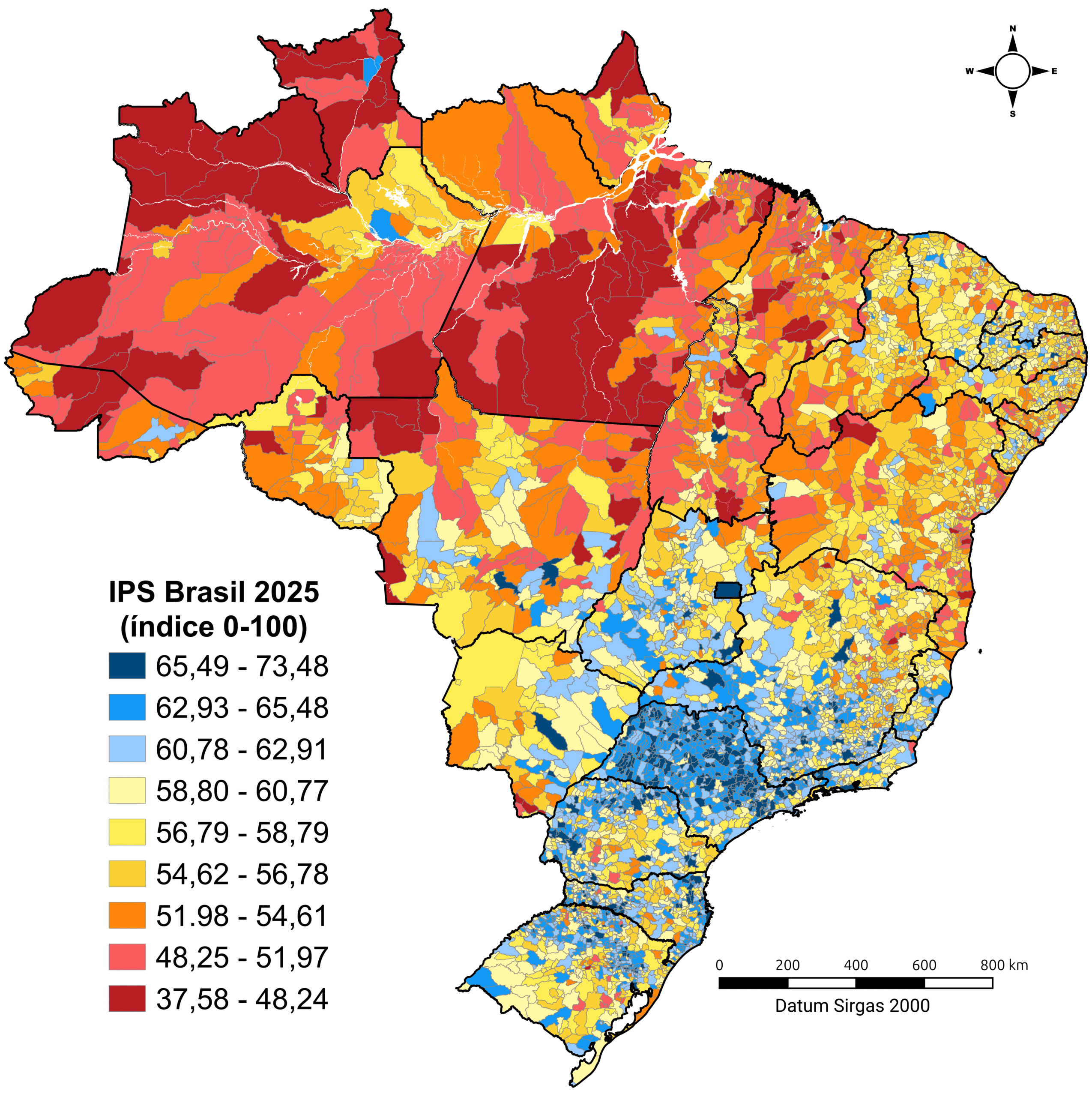
    Figura 1. Mapa dos resultados do IPS Brasil 2025

    No site do IPS Brasil, é possível analisar o perfil detalhado de todos os municípios, identificando em quais áreas cada um se destaca e onde há necessidade de melhorias. A plataforma também permite comparar municípios que estão na mesma faixa de PIB per capita, área e população, oferecendo uma ferramenta poderosa para gestores públicos, investidores sociais e a sociedade em geral entenderem melhor as dinâmicas de desenvolvimento local e planejarem ações mais eficazes para promover o progresso social e ambiental.

    Acesse o site do IPS e confira o perfil de todos os municípios brasileiros: ipsbrasil.org.br

    O que o IPS Brasil 2025 avalia
    O Progresso Social foi definido por um grupo de especialistas acadêmicos e sintetizado pelo SPI como “a capacidade da sociedade em satisfazer as necessidades humanas básicas, estabelecer as estruturas que garantam qualidade de vida aos cidadãos e dar oportunidades para que todos os indivíduos possam atingir seu potencial máximo”.
    A partir desse conceito, o IPS Brasil 2025 é formulado com base em 57 indicadores divididos em três dimensões: Necessidades Humanas Básicas; Fundamentos do Bem-Estar e Oportunidades.

    Desenvolvido através de uma parceria entre o Imazon, Fundação Avina, iniciativa Amazônia 2030, Anattá, Centro de Empreendedorismo da Amazônia e Social Progress Imperative., o IPS Brasil é baseado exclusivamente em dados públicos e atualizado anualmente. A ferramenta permite acompanhar tendências e medir a efetividade de políticas públicas em tempo real.

    A construção do IPS Brasil 2025 segue uma metodologia rigorosa baseada no padrão internacional do índice. A escolha dos 57 indicadores usados no cálculo obedece a critérios como relevância social ou ambiental, foco em resultados, uso de dados públicos e confiáveis, atualizados e disponíveis para, pelo menos, 95% dos municípios do país. Cada dado passa por uma modelagem estatística detalhada, que inclui normalização, verificação de qualidade, definição de valores de referência e aplicação de pesos definidos por Análise de Componentes Principais (ACP). O resultado final é um índice que varia de zero (pior cenário) a 100 (melhor cenário), refletindo a média simples dos desempenhos nas três dimensões do progresso social. As fontes utilizadas vão de bases consolidadas como DataSUS, CadÚnico e Anatel até iniciativas como o MapBiomas e o Instituto de Estudos para Políticas de Saúde.

    Diferentemente de índices econômicos como o PIB (Produto Interno Bruto) e IDH (Índice de Desenvolvimento Humano), o IPS mede diretamente resultados sociais e ambientais, funcionando como bússola para gestores públicos, investidores sociais e organizações da sociedade civil. “O IPS permite visualizar desigualdades que não são explicadas apenas por indicadores econômicos. Municípios com PIB semelhante apresentam, muitas vezes, desempenhos muito distintos no índice, o que reforça a importância de políticas públicas voltadas ao bem-estar social de forma integrada. Com o IPS, é possível identificar onde as políticas públicas estão funcionando e onde é necessário intervir com mais urgência. Ele transforma dados complexos em um retrato claro e comparável entre municípios e estados”, afirma Melissa Wilm, coordenadora do IPS Brasil.

    A edição 2025 traz uma atualização importante no seu conjunto de dados: foram incluídos novos indicadores que enriquecem o diagnóstico territorial: Consumo de Alimentos Ultraprocessados, Resposta ao Benefício Previdenciário, Resposta a Processos Familiares, Índice de Vulnerabilidade das Famílias e Famílias em Situação de Rua.
    Principais resultados

    A produção do IPS Brasil 2025 contou com apoio técnico e institucional de uma ampla rede de instituições comprometidas com o desenvolvimento sustentável do país. Contribuíram para essa edição Centro de Empreendedorismo da Amazônia (CEA), Conselho Nacional de Justiça (CNJ), Eneva, especialistas independentes, Fundação Itaú, Fundação Roberto Marinho, Hydro, Instituto do Homem e Meio Ambiente da Amazônia (Imazon), Instituto Floresta Viva, Instituto Igarapé, Instituto Itaúsa, Instituto Soberania e Clima (iCS), MapBiomas Brasil, Ministério Público Federal (MPF), Not Another Boring Company, O Mundo que Queremos, Projeto Saúde e Alegria, Social Progress Imperative, Universidade de São Paulo (USP) e Vale.


  • Fatos da Amazônia – 2025

    Fatos da Amazônia – 2025

    O estudo Fatos da Amazônia 2025 apresenta um retrato abrangente e atualizado da Amazônia Legal com base em dados públicos e confiáveis sobre o território, a população, o meio ambiente e a economia da região. A publicação mostra que a Amazônia Legal concentra 59% do território brasileiro, abriga 26,7 milhões de habitantes e enfrenta desafios urgentes ligados ao desmatamento, pobreza, urbanização precária e violência.

    Segundo o estudo, o desmatamento acumulado até 2024 já atinge 857 mil km², ou 21% da cobertura florestal original do Bioma Amazônia. No mesmo período, foram registrados cerca de 2 milhões de focos de calor, com destaque para os estados do Pará e Mato Grosso, que lideram os registros de queimadas.

    As emissões líquidas de gases de efeito estufa (GEE) da região ultrapassaram 600 milhões de toneladas de CO₂ equivalente em 2022.

    A publicação também destaca o peso da Amazônia na produção de alimentos e produtos da bioeconomia. Em 2023, a produção de açaí gerou R$ 8,9 bilhões em valor, seguida pelo cacau (R$ 2,1 bilhões) e castanha-do-brasil (R$ 173 milhões). No mesmo ano, o rebanho bovino na região chegou a 106,7 milhões de cabeças, e as pastagens ocuparam 76,8 milhões de hectares — mais do que o dobro da área plantada com agricultura.

    Problemas ambientais persistem, como a mineração ilegal, que já ocupa 246 mil hectares, com forte presença em áreas sensíveis como a Terra Indígena Yanomami. Além disso, a superfície de água da região encolheu quase 9% entre 2022 e 2024, impactada por eventos extremos como secas severas.

    Em termos sociais, a Amazônia Legal concentra 36,2% da população em situação de pobreza, acima da média nacional. Embora a maioria da população (76%) viva em cidades, o acesso a infraestrutura básica ainda é limitado: apenas 19,3% das moradias cadastradas no CadÚnico contam com rede de esgoto, contra 60,2% no restante do Brasil.

    A violência também é uma preocupação crescente. A taxa de homicídios na região chegou a 32,9 por 100 mil habitantes em 2023, permanecendo acima da média nacional, mesmo após leve recuo em relação ao pico de 2017.

    O relatório propõe que, diante da diversidade e complexidade amazônica, é necessário compreender as múltiplas “Amazônias” que revelam diferentes níveis de conservação e uso da terra.

  • The Amazon in The New PAC: Recommendations to Promote Sustainable Infrastructure

    The Amazon in The New PAC: Recommendations to Promote Sustainable Infrastructure


    Download here

    In August 2023, the federal government launched a new edition of the Growth Acceleration Program (Novo PAC), promising to boost the national economy through infrastructure investments aligned with the Ecological Transformation Plan. However, a new analysis by the Climate Policy Initiative (CPI/PUC-Rio), in collaboration with the Amazônia 2030 project, warns that the program risks repeating past mistakes and exacerbating inequalities if it fails to incorporate a strategic and tailored vision for the Amazon.

    Authored by researchers Joana Chiavari (Research Director, CPI/PUC-Rio), Gabriel Cozendey, and Luiza Antonaccio (Senior Legal Analysts, CPI/PUC-Rio), the study assesses how the planned investments under Novo PAC affect the Amazon region across four crucial sectors: logistics, connectivity, sanitation, and energy.

    The research highlights that, despite the broad presence of projects in the Legal Amazon, the distribution of investments does not reflect the real needs of the local population. States like Acre and Amapá, which rank among the worst in infrastructure indicators, receive little attention from the program. Moreover, there is a disconnect between Novo PAC and the national deforestation reduction goals set in the Action Plan for the Prevention and Control of Deforestation in the Legal Amazon (PPCDAm).

    According to the study, Novo PAC still follows an investment logic conceived outside the Amazon and for areas beyond the Amazon. “It is essential to develop infrastructure that respects regional diversity and contributes to improving the lives of the local population,” the analysis states.

    The study also criticizes the inclusion of high environmental impact projects—such as the Ferrogrão railway and the paving of the BR-319 highway—in preserved forest areas, without considering less harmful alternatives that are more aligned with efficient land use and the promotion of the bioeconomy. The authors argue that long-term plans, such as the National Logistics Plan (PNL), should begin to incorporate socio-environmental criteria and a strategic vision for the region.

    Among the recommendations are the creation of a specific development plan for the Amazon, with tailored solutions for the region’s diverse contexts—such as Forested Amazon, Deforested Amazon, and Amazon Under Pressure—and improved transparency and qualification of public investment decision-making processes.

    According to the researchers, aligning Novo PAC with sustainability goals and the real needs of the Amazon is not only a matter of social and environmental justice but a fundamental condition for the program’s long-term success.

    Read the full paper here.